

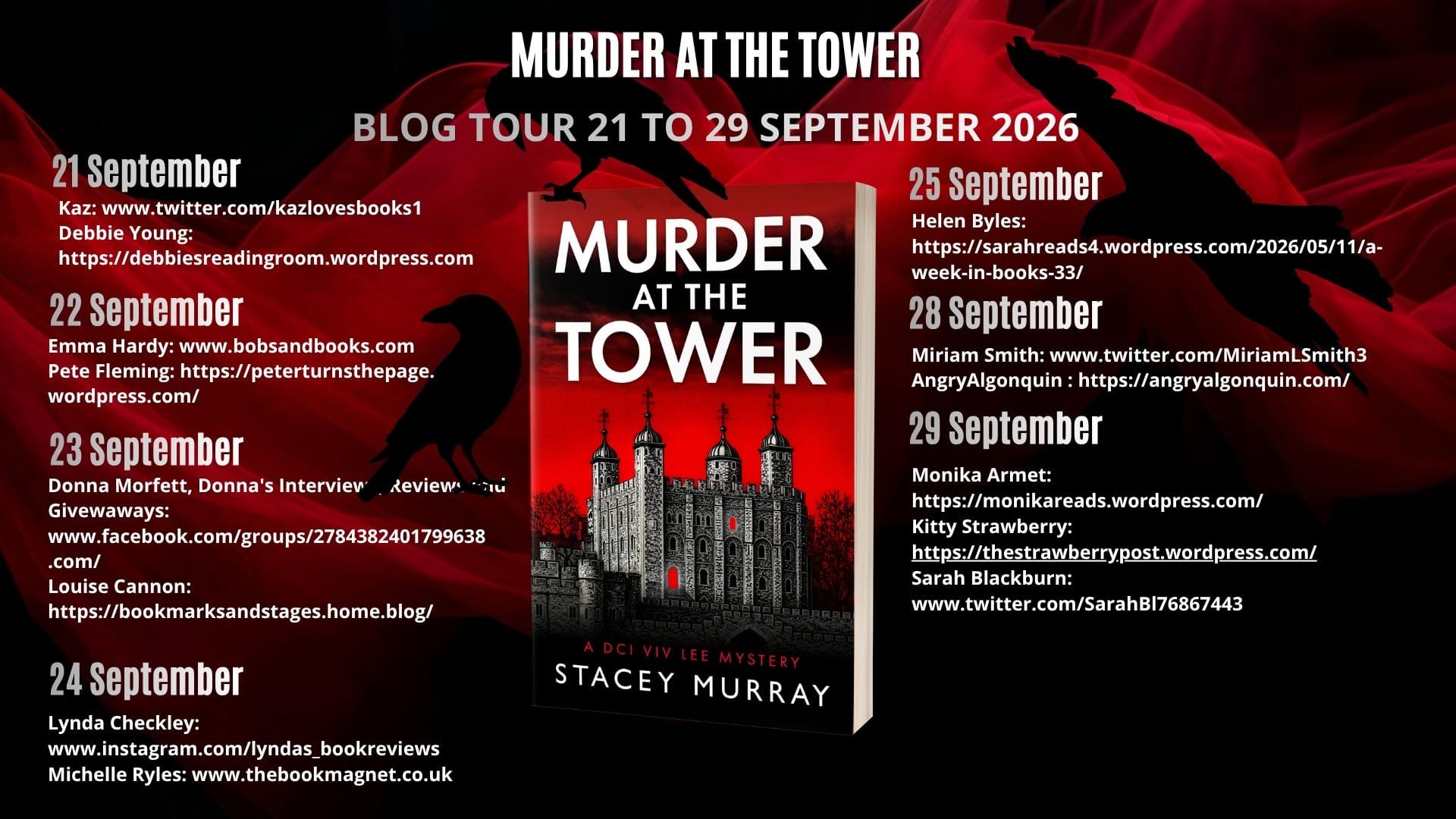
Many thanks to Rebecca Collins and Hobeck Books for the advance copy of "Murder at the Tower" for review. Because I'm so passionate about the subject, I'd like to share Hobeck's AI policy as it appears on their home page.
HOBECK BOOKS AI POLICY STATEMENT: In response to recent advances in AI technology we have implemented a non-AI-generative text policy for all our books, blurbs, marketing materials and book reviews. The book reviews arranged by Hobeck have been written by genuine humans who are also book lovers and avid readers and have not been generated by AI in any shape or form.

I've only been to the Tower of London once, many years ago. A combination of insomnia and jet lag left me sleepless for two days. Even so, the famous place and its absorbing history left a huge impression on me. I especially recall the dignity and bearing of the Yeoman Warders, who lead tours of the Tower, and the mischievous ravens stealing crisps from the tourists.
In Stacey Murray's "Murder at the Tower", (which I'm happy to report has ravens of its own) the fabled place is the site of a terrible crime. The book has an appropriately foreboding opening:
On this gloamy night, the Yeoman Warders (they prefer this term to "Beefeaters") are guiding the last day's tourists out of the Tower gates. Since all of the Warders live inside the Tower itself, they then head home or to their various duties. We follow cantankerous Night Watchman Yeoman Warder Anthony Warboys. When Warboys hears the cry of "All's up!" he's relieved: it means the last visitor is gone for the day. He is not a fan of tourists, babies, or the public in general. This begs the question of why Warboys applied for one of the hardest-to-qualify-for positions in the UK, knowing that engaging with the public would be a big part of his job.
Adding to his irritation is that he's on night duty for the next fourteen hours. He'll be spending most of the night in a freezing, musty, guardroom. Warboys takes out his flask for a nip he's not supposed to have while on duty, but it's empty. He heads home for a refill and sees a stranger standing outside his door. That's the last time anyone sees Warboys alive.
On his way back from feeding the ravens the next morning, Yeoman Warder Damian Dooley, Ravenmaster of the Tower, sees a body. He instantly recognizes Warboys. He pulls out a whistle that the Warders carry in case of emergency, and blows the hell out of it. Warders come running from all directions.
Tower physician, Dr. Amanda Harper, and Tower Governor, Christopher Wilkes, appear next. They call the police and lock the Tower down. Ravenmaster Dooley has an interesting thought: at least Warboys will no longer make his life a misery.
Just back from vacation, Detective Chief Inspector Viv Lee gets a call from her boss, Detective Superintendent Clive Marsh. When he tells her that a body has been found in the Tower of London, at first she thinks he's winding her up. A murder inside the Tower? Marsh tells her to get there right away, and Lee can't help but feel intrigued about investigating a potential crime in such a storied location.
When Lee and Marsh get to the East Drawbridge gate, (the book has a helpful map) they're greeted by Governor Wilkes and taken to the scene. Lee's seen bodies before, but:
The CID pathologist, Simon Bain, tells Lee and Marsh what he knows so far. Warboys was definitely murdered; the body shows clear-cut signs of strangulation by garrotte. The crime occurred sometime between two and three a.m. Otherwise there's not a lot to go on, so Marsh, Lee and the team start to organize. The Governor takes them to their colleague DI Ian McCabe, who arrived earlier that morning.
Marsh remarks to McCabe that the Tower must have CCTV cameras everywhere. McCabe and Lee are dismayed to find out that cameras are only installed at the gates and public areas. For privacy's sake, there are no cameras in the lanes where the Yeoman Warders and other inhabitants live.
With The Tower officially a crime scene, it is closed to the public for the first time since the Second World War. The Tower administrators and the British government are extremely concerned about the bad publicity and effects on tourism. The pressure on the CID to solve the case increases every day the Tower is closed.
To help the CID with Tower access and assistance, Governor Wilkes assigns Yeoman Warders Odudu and Roberts. The CID also needs to know more about Warboys, so Wilkes tells them to speak with George Sheeran, the Chief Yeoman Warder. When Sheeran unexpectedly pops into their meeting, the Governor appears to be irritated by him and it's clear the feeling is mutual. Sheeran gives Marsh and Lee important information: the murder victim was under disciplinary proceedings for bullying and inappropriate text messages.
The CID checks all of the CCTV cameras at the Tower gates to help narrow the list of suspects. No one exited or entered the gates after midnight. This startling evidence means not only that someone living at the Tower is a killer, but they must also still be inside. Governor Wilkes is rattled by the news, mostly because of the effect this will have on his reputation.
At Marsh's request, the Chief Yeoman Warder George Sheeran calls a meeting of all the Yeoman Warders for that evening. They gather at the warden pub, The Keys, one of the last places Warboys was seen before his death. Marsh muses to Lee that Governor Wilkes must be a navy man because he uses so many nautical references. This might explain the bad blood between him and the Chief Yeoman, who's an army man.
As Marsh opens the meeting, an unexpected late arrival barrels through the door. Craig Calvert, all spray tan, jeans and tight shirt, is the husband of the Tower's Deputy Governor Julia Calvert. She's on a business trip with the Constable of the Tower, Lord Gillott. He's the Tower’s most senior appointment and the representative of the King. Julia's husband is attending "on her behalf". It's most unusual, but he's allowed to stay.
Marsh tells the Warders that the police have confirmed that no one entered or left the Tower premises between midnight last night and their arrival. Everyone is shocked and outraged by the implication that the murderer is one of their own. When the meeting is over, Warder Aled Hughes, who lived a few doors down from the victim, tells them that he saw Warboys arguing with someone outside his house the day of the murder. Unfortunately, he can't tell them who it is.
Over the ensuing days, we learn more about the Tower's customs and rules. The Tower still runs on centuries-old practices such as the Ceremony of the Keys, the ancient system of work called the daily Waite, and of course the care and feeding of the famous ravens. But all of this is secondary to the central question: who within these ancient walls hated Warboys enough to kill him? The unpleasant Warder was so unpopular that the list of suspects is long.
When DS Marsh has a sudden heart attack, DCI Lee finds herself alone at the head of this very high-profile investigation. Those within the Tower gates are living in a world marked by suspicion, fear and closely held secrets. To add to the pressure, everyone from the Prime Minister down is urging the CID to find the culprit and re-open the Tower as soon as possible. It's a race against time for Lee and her team; can she solve the crime before being replaced? And once solved, will the Tower be restored to its full glory?
In setting her book inside the Tower walls, Stacey Murray has added a new dimension to the murder mystery at its core. Not only is the Tower a mesmerizing yet enclosed setting, but it exercises its power over both its inhabitants and the investigative team in different ways. Tower inhabitants are just like any other people, with their own factions, friendships, and disagreements. The solution to the mystery can only be found by uncovering the history and secrets of the lucky few who live there. Murray also deftly portrays the way the political focus on the case clashes with the CID team's determination to do a full investigation, regardless of time.
I really enjoyed "Murder in the Tower" and I hope to go back under better circumstances!
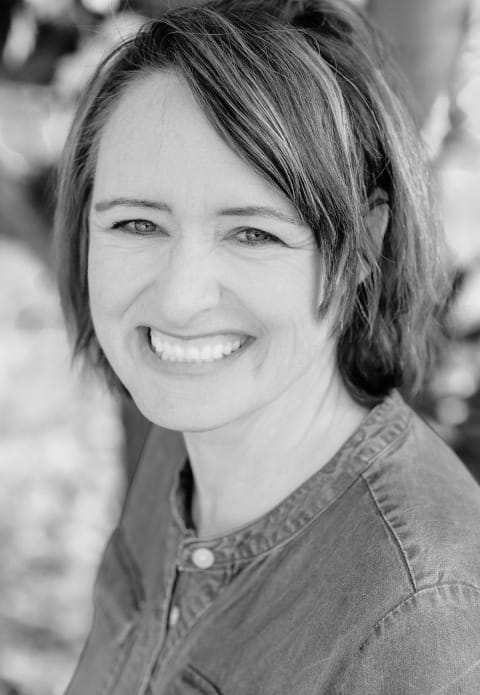
Stacey Murray is a native of Glasgow. She was an international finance lawyer in London and Hong Kong, before changing career to become an independent film producer. Her first film, A Boy Called Dad, was acquired by the BBC and nominated for the Michael Powell Award for Best British Film at the Edinburgh International Film Festival (which meant she got to chat with Sean Connery). She lives in the dramatic Derbyshire Peak District which is the setting for her tense psychological novel The Thief of Joy. Her first novel was the acclaimed The Curious Case of Maggie Macbeth. You can follow her on Bluesky as @thestacemeister.bsky.social
Please buy/order "Murder at the Tower" from your local independent bookstore, or go to bookshop.org and order there. They now offer ebooks as well.

For audiobooks, go to libro.fm.